

NEWS
New Works

Total Running Time by Josephine Sales, an installation “composed of a series of clocks examining time as an infrastructure, exploring how delay and duration shape experiences of disability and debility,” is on view in An Inherent Undoing at the 8th Floor (NYC) through June 6.
In the audio documentary Disability Ecologies, scholar Emerson Cram narrates the histories of “poor farms,” residential institutions that emerged across the Midwest US in the 1850s, and more recent efforts to intentionally redesign their land use and crop distribution.
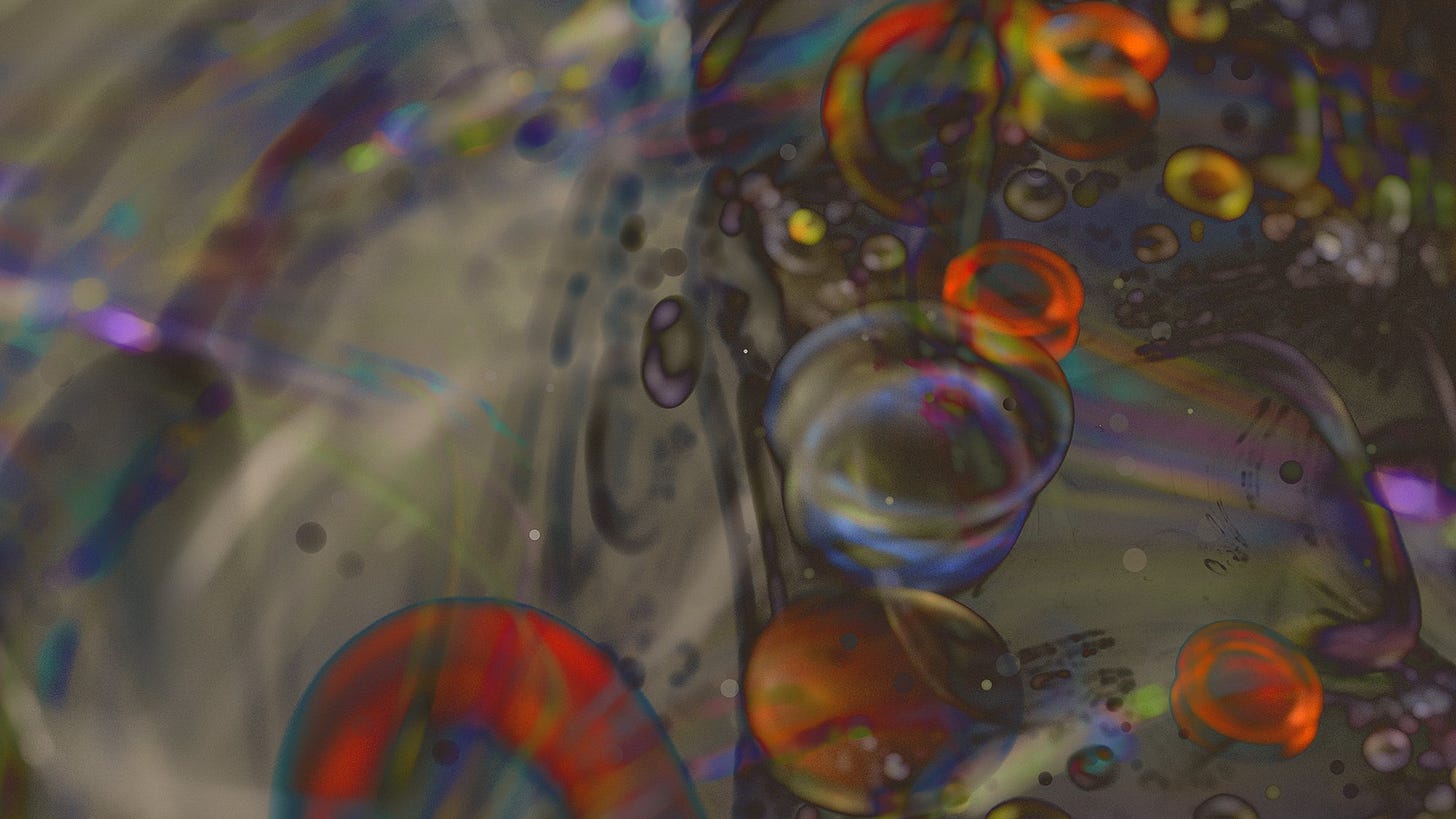
Carevoyance (2026) by Akash Sheshadri. In “Towards Nesting as a Modality of Reworlding From Within,” visual artist-designers Menko Dijksterhuis and Akash Sheshadri reflect on their “para-academic programme” Crip the Curriculum and offer “Nesting,” a way of “building possibility where the structure forecloses” within Dutch Art Academia and cultural ecology.

Artists and organizers anna RG and Theodore (ted) Kerr are in and beyond conversation for ISSUE Online, “an evolving platform for digital-first works” celebrating 20 years of the Artist in Residence program at ISSUE Project Room (Brooklyn). “Drawing on RG’s speculative fiction project, Sick Music Center, the pair establish a shared set of rules, organizing their dialogue around three key prompts they call ‘Strategy,’ ‘Focus,’ and ‘Loose Ends.’“
Writer Leora Fridman recently interviewed artist Alexis Kyle Mitchell for “Disability in Relation,” published in Parapraxis. They talk about Mitchell’s film The Treasury of Human Inheritance, which was in The Goal of Our Health that closed at JOAN (Los Angeles) earlier this year.
Cripping Up Sex has published Queers on Wheels, a resource guide with “information about how to hire open-minded and queer-friendly aides, maintaining a good relationship with your aides, how to adapt sex toys, sex positions, and assisted masturbation.”
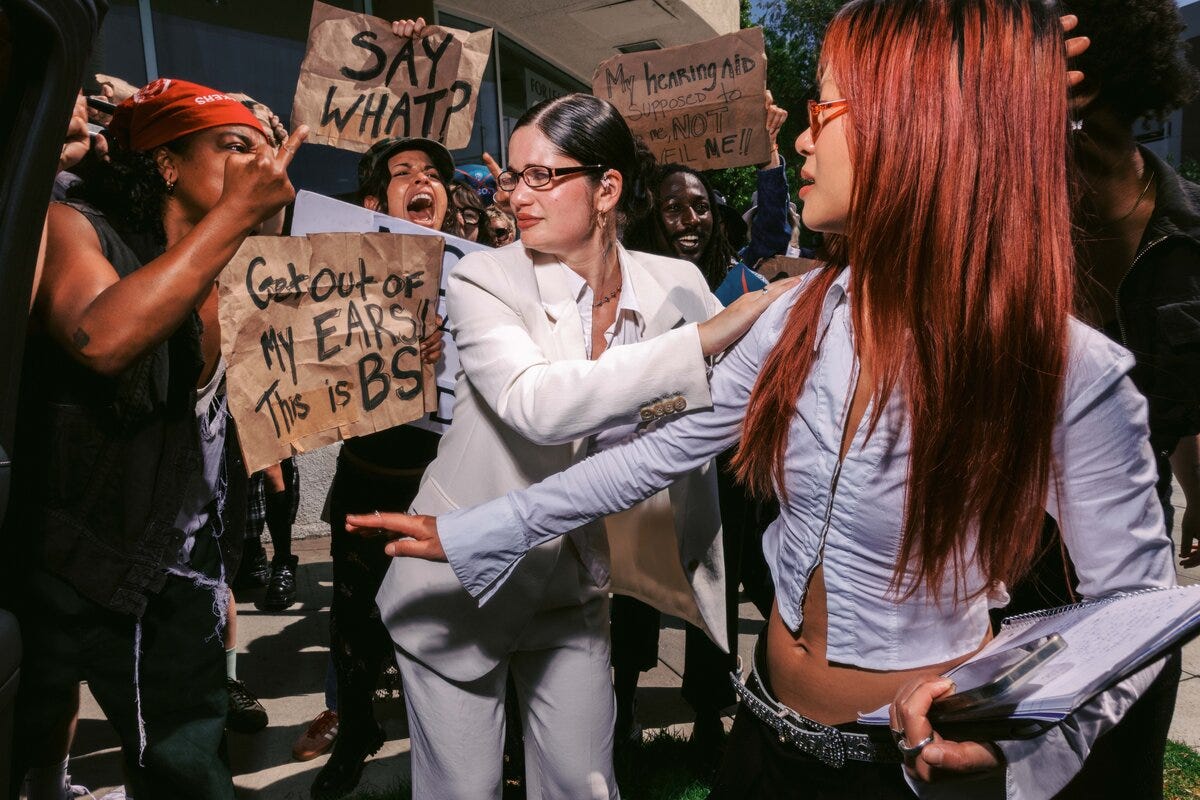
Photo by Sean Behr. Works from Vitasona, the speculative hearing aid company by artist Vita Kari, were featured in about:blank, the inaugural show at Dotted Lines LA that closed last month. Imagining “a revised technological history in which hearing aids developed along a different cultural timeline and became highly visible, socially integrated objects,” Kari performs as Vitasona’s CEO at a time when the company rolls out advertisements integrated into their products.
“The blind vibe-coding revolution is upon us,” says Andrew Leland on an episode of the Aboard Podcast last month.
Jennifer Lauren Gallery, with Plus Tate, TripleC/DANC, and several artists, have published the Creative Access Toolkit for Visual Arts Organisations.

CALLS

The Disabled Ecologies Lab, directed by Dr. Sunaura Taylor, recently announced a call for submissions for the inaugural issue of a Disabled Ecologies Almanac. Rolling submissions until October 15.
Disabled artist Maggie Whittum and her team are seeking funds to finish their documentary The Great Now What?, “a raw and honest ten-year reckoning with what it actually takes to rebuild an identity after a stroke steals the one you spent a lifetime building.”
As the Enhancing Audio Description II project at the University of York comes to a close, researchers are seeking anonymous survey respondents “to measure the impact of the project outside of academic environments.”
Cre8tive Cadence Consulting, a “disability-led, multimedia and social impact consultancy,” seeks applications for its paid 2026 Storytelling Ambassador program, meeting weekly between June 23 and July 21. Submit by June 12.
Applications are open for Embodying Disability Justice in Care Work, a 12-week (September to December) Hedge School program by the Radical Therapist Network. Apply by June 8.
EVENTS
Be better broken: Disability Justice and Death Methodologies with Jen Deerinwater and Conjure
Saturday, May 30, 1 - 3 pm ET, online
Disability justice and death frameworks are integral to understanding brokenness and how to build an ecollectively liberated world beyond the margins. Yaffa, Jen, and Conjure will be in conversation about claiming brokenness as a tool for liberation, something that disabled folks have been doing for generations. It's undeniable that we are seen as broken as disabled, as trans, as indigenous, and so many other marginalized folks and we are the ones who get to define the magic that comes through that brokenness.Deaf and Disabled Access Worker Mixer NYC
Thursday, May 28, 7 - 9pm ET, in-person in Brooklyn
Are you a disabled access worker who wants to make friends, talk shop, and chill with good company? Come hang at Whoopsie Daisy (Crown Heights). Madison Zalopany, Lily Lipman, Sarit Cahana, and Emma Jaromin have been scheming up a fun time. As disabled access workers, we want to get to know other disabled access workers and create a safe unaffiliated space for us all to learn from and collaborate with each other. This is the first of hopefully many get-togethers for those in the cultural access world.The Paradox of Hypervisibility: Disability, Creativity and the Politics of the Gaze
Thursday, May 28 and Friday, May 29, online and in-person at the Centre for Research in the Arts, Social Sciences and Humanities (Cambridge, United Kingdom)
This symposium centres on the politics of exposure: how do disabled artists negotiate, resist, and reclaim the normative gaze? Through their work, disabled artists invite audiences into new modes of perceiving disabled embodiment – not as broken or inspirational, but as a source of creativity, virtuosity, and aesthetic innovation.