

NEWS
Description, a Lunar Science

NASA’s recently released trove of photographs from the Artemis II lunar flyby came with a delightful surprise: exquisitely detailed open image descriptions. The caption for the image above, for example, reads (in part):
“The dark portion of Earth is experiencing nighttime, while on its day side, swirling clouds are visible over the Australia and Oceania region. In the foreground, Ohm crater shows terraced edges and a relatively flat floor marked by central peaks — formed when the surface rebounded upward during the impact that created the crater.”
Global public media with thorough descriptions feels so right, doesn’t it? But maybe it actually isn’t all that surprising given the low-key, high-profile centrality of human description to the mission.

For 7 hours, the astronauts took turns resting, taking photos, and documenting their observations. They used something called the Lunar Targeting Plan as their guide, “capturing imagery with handheld Nikon D5 cameras, recording audio of their observations through the camera view finder and with their unaided eyes, and annotated notes on their handheld crew tablets.”
In one audio file, Commander Reid Wiseman describes the Terminator - the line separating “islands of light” from “deep black valleys that look like holes straight to the center” - in terms of “magic.” The wonder in his voice is a refreshing move beyond the common fixation on objectivity that blind artists and activists have critiqued for decades.
By figuring descriptions that only human could produce as a primary form of mission data, NASA articulated a global endorsement for description as an access instrument that cannot be supplanted by AI. Okay, they may not say it like that.
And let’s be real: a big part of the reason the astronauts’ “unaided eyes” on the Moon are so precious is because they are thought to be utterly nondisabled actors on the stage of human History with a capital H. But that could change. Last year, the world’s first disabled astronaut was cleared to take part in a mission to the International Space Station.
And, as Deaf artist Nyle DiMarco recently pointed out, NASA’s entire human spaceflight program relies on disability data. Starting in the late 1950s, a group of Deaf men now known as “the Gallaudet Eleven” spent years recording their non-reaction to motion sickness “to improve understanding of how the body’s sensory systems work when the usual gravitational cues from the inner ear aren’t available.”
The whole thing feels like another oracular message from Alice Wong who, along with Sam de Leve, told us almost a decade ago that “crips are particularly suited to life in space.”
New Works

Leah Lakshmi Piepzna-Samarasinha’s newest poetry collection, The Way Disabled People Love Each Other, is out from Arsenal Pulp Press. The collection documents “a specific time of pandemic fascist grief and possibility” with “odes, elegies, and mourning songs” that “sparkle like switchblades and offer new possibilities for love, grief, and memory.” You can catch Leah on tour this week in Toronto (Wednesday), Brooklyn (Sunday), and later in Chicago, Minneapolis, and Atlanta.

Able Zine recently published a review of a recent program series called “Disabled Legacies: Beyond Access and Inclusion” and the exhibition Misfits, both at the Paul Mellon Centre in London. “From researchers to poets, it was a demonstration of disabled excellence.”
For the 3rd and final year of the Inclusive Communities Project, the UK-based organization Attitude is Everything has introduced the “Grassroots and Community Accessibility Framework” with community partners.
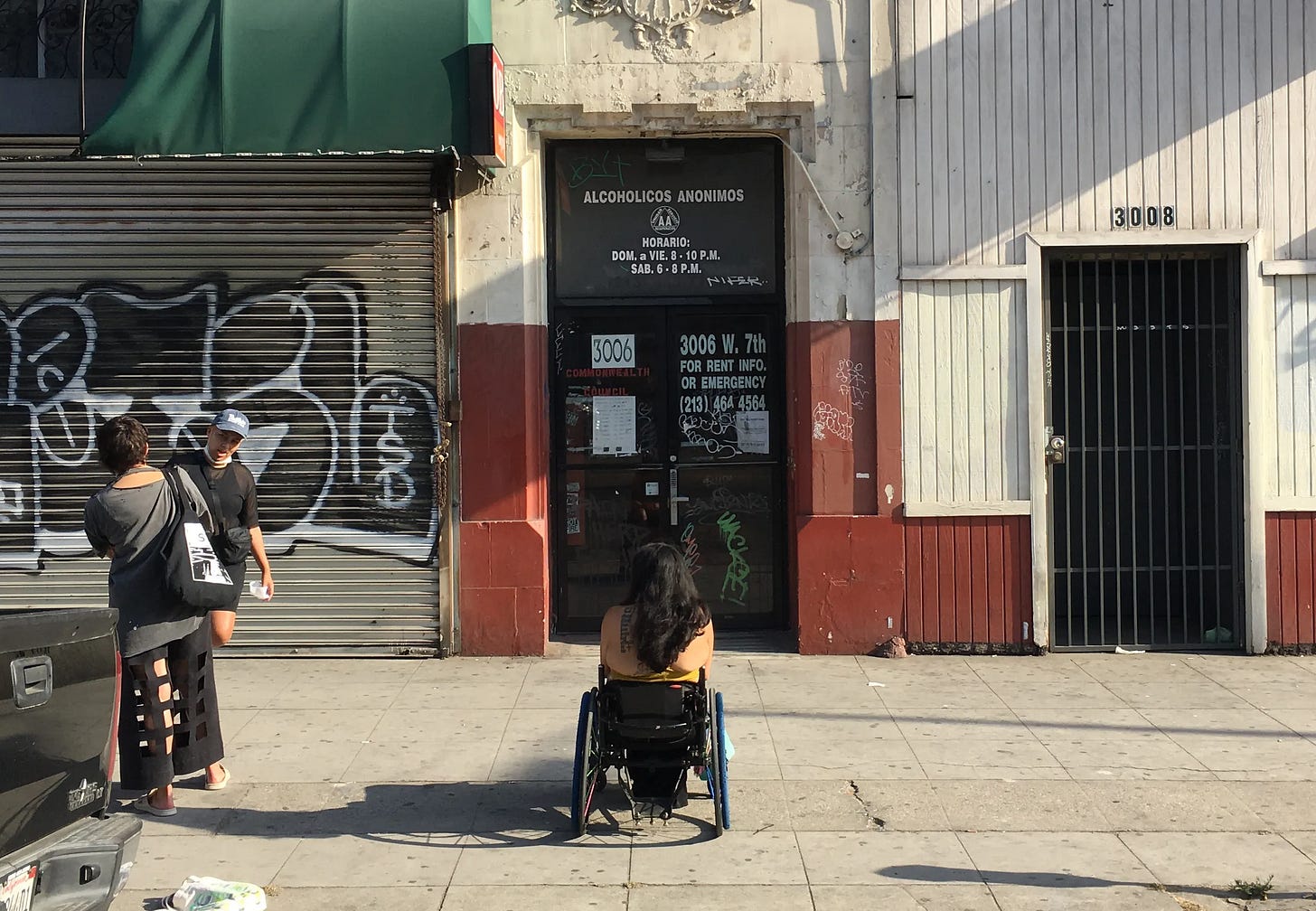
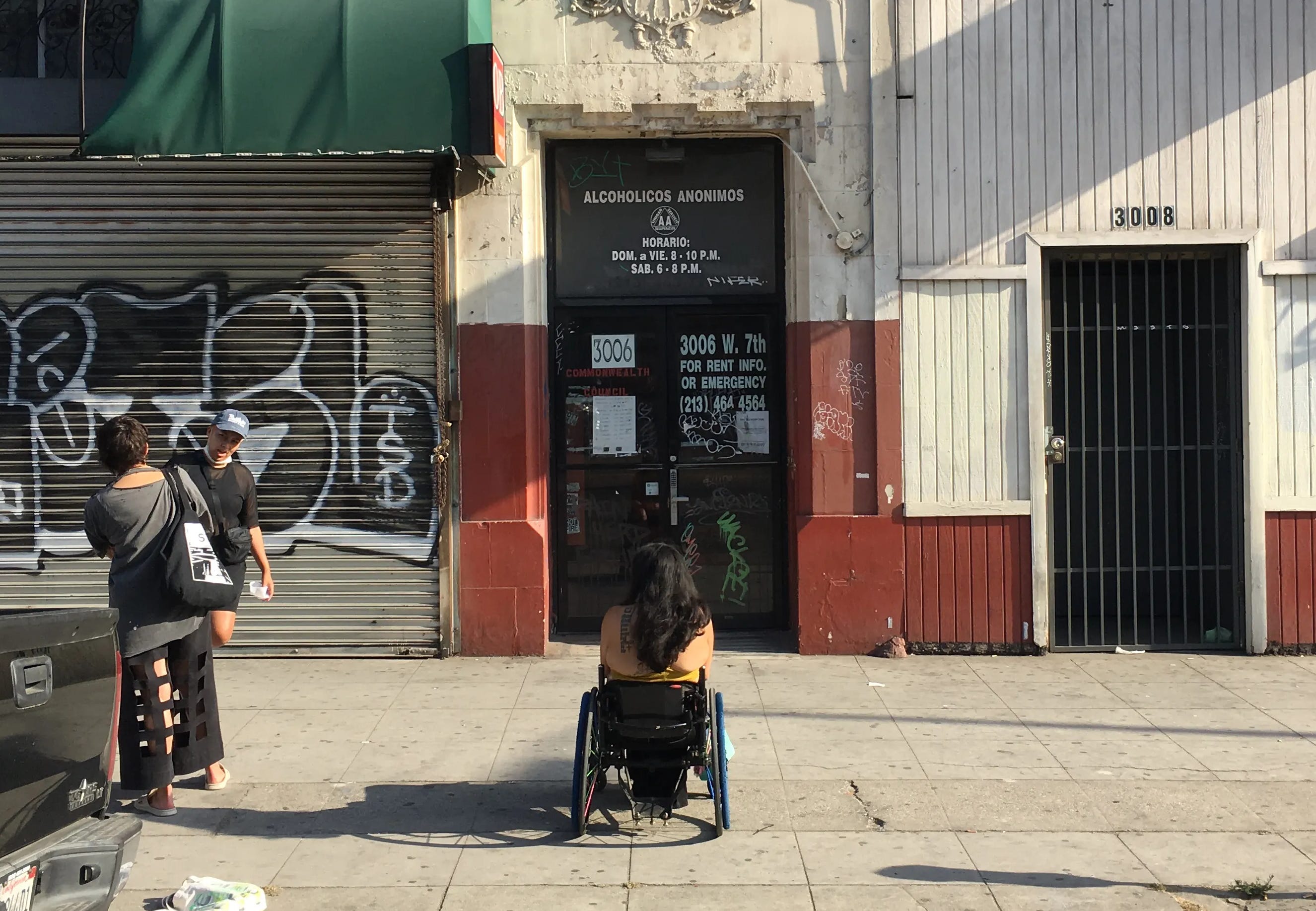
Jaklin Romine’s “ACCESS DENIED — Commonwealth and Council” (2021) Curate LA released a new interview by Shelley Holcomb, “Calm Like a Bomb: Jaklin Romine and the Architecture of Exclusion,” in conversatino with Romine about a series called ACCESS DENIED where she remains outside of inaccessible arts spaces across Los Angeles, documenting what it means to be excluded in plain sight.
Last month, Grantmakers in the Arts released a podcast episode featuring Meier Galblum Haigh and Kenrya Rankin from Disability Culture Lab about AI, policy, and creative power.
Upward Bound, out now from Penguin Random House, is the debut novel of nonspeaking autistic author Woody Brown “deeply affecting portrait of the interlocking lives at an adult day care center in Southern California.”
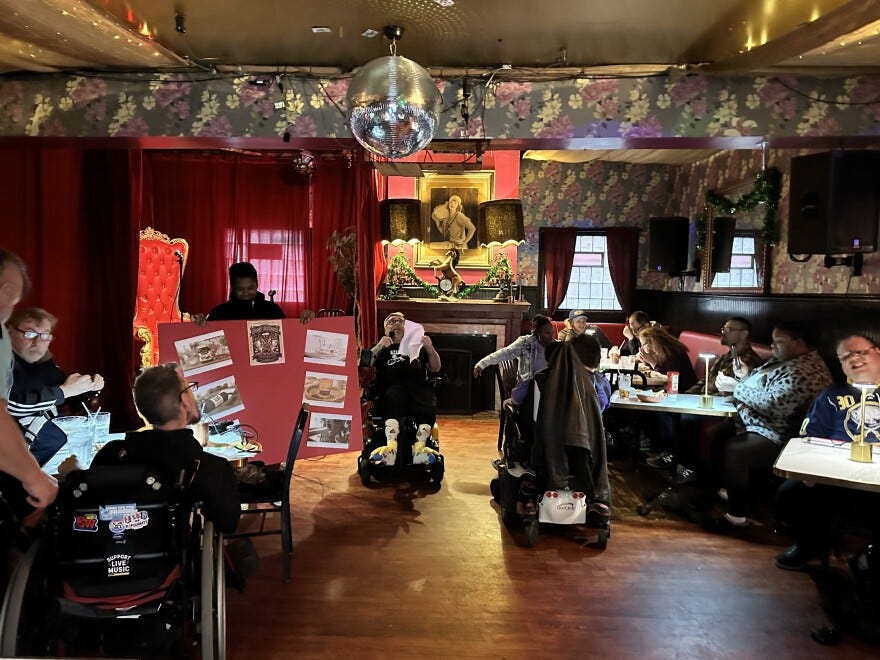
Photo by Emyle Watkins. For the Disabilities Beat from Buffalo Toronto Public Media, Emyle Watkins recently recapped the first Funny Bones event, a disability-led comedy night.
Accessible Lines, a project from artist Hatiye Garip that “supports the accessibility of the illustrations in various ways,” invites illustrators to present their work through audio descriptions in their own voices in Turkish and English.
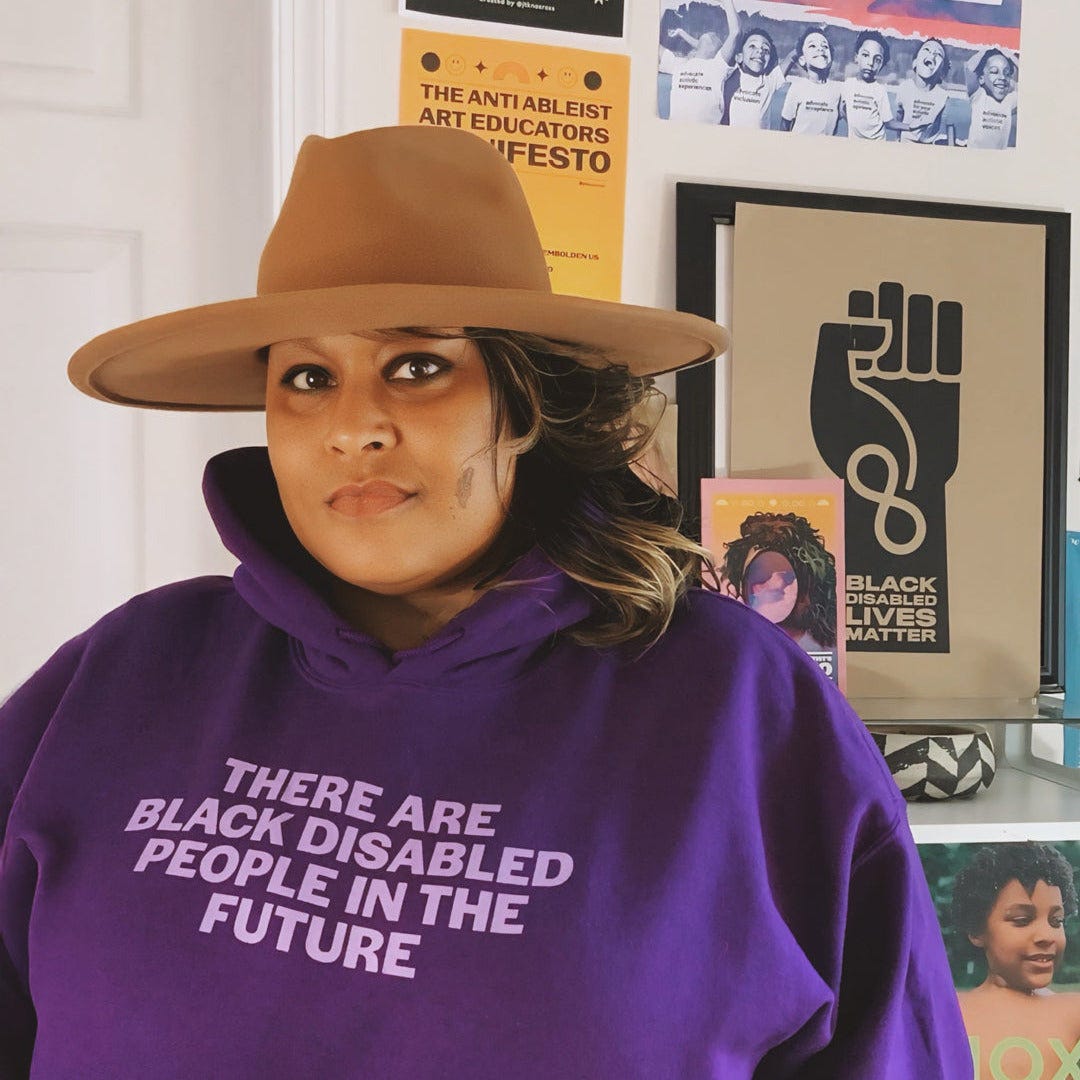
The first drop of Afro-Latina, neurodivergent artist, designer, educator, and activist Jen White-Johnson’s collection “Disability Joy and Justice” is now available from Philadelphia Print Works.
A new article by Rachel Repinz and Julie Pentz of Bashi Arts in Dance Education in Practice examines disability justice-informed hybrid dance models for disabled and non-disabled dancers.
Disability Rights Education and Defense Fund (DREDF) published a new report by Katie Savin, Callie Freitag, and Matthew Borus called “‘In the last year, it’s gotten a lot worse”: A Qualitative Investigation of Barriers to Disability Benefits in 2025.”


In Other News…
The 2025 Wynn Newhouse Awards winners were recently announced. They are Matt Bodett, Chloe Pascal Crawford, Serena JV Elston, Suzanna James, Jordan Lord, and Nolan Trowe.
CALLS
Amanda Grae Platner, Resident Artist at The Atlanta Contemporary, is fundraising to support artist honoraria for a public program on disability, access, and sustaining a career in the arts on May 3.
The Squeaky Wheel has introduced a Community Microgrants program for one-time short-term relief payments of $250 to help cover small but crucial expenses, including but not limited to medication, accessibility tools, and cell phone bills.
The Disability EmpowHer Network and the Toledo Museum of Art have issued an open call for Disabled Women Make History (and Art), a group show that will be on view from June 20 to July 31, 2026. Submit by April 19.
The Center for Independent Living is hiring for multiple positions in West Oakland and Berkeley, California.
NIAD Art Center is hiring an Executive Director (Richmond, CA).
The Society for Disability Studies is hiring an Assistant Editor for Disability Studies Quarterly. Apply by April 15.
EVENTS
Disability, Campus, and Culture: A Panel on Disability Justice
Wednesday, April 15, 5 - 6:15pm ET, in-person at McMahon Hall Room 109 (155 West 60th Street, Lincoln Center Campus) and on Zoom
How do we cherish disability in the contemporary university? In this collaborative presentation, Capria Berry and Kevin Gotkin will report from their work to cultivate spaces for study and flourishing with disability justice.Open Worlds: Science - The Precarious Body
Friday, April 17, 6 - 8:30pm ET, in-person at the Museum of the Moving Image (Astoria, NYC)
This evening program showcases the art and medical imaging technologies featured in the exhibition Overexposed: Art, Technology, and the Body, on view at the Museum. Artist Panteha Abareshi, whose video Methods of Care for the Precarious Body is included in the exhibition, will begin the evening with an artist talk discussing the politics of seeing and knowing the body. The talk will be followed by a panel discussion about the ways that personal health, medical imaging and creative inspiration collide, with radiologist Lily Offit in conversation with Abareshi and Overexposed catalog co-editor Elisabeth Sherman. The discussion is moderated by the exhibition’s curator Sonia Epstein, MoMI’s Curator of Science & Technology.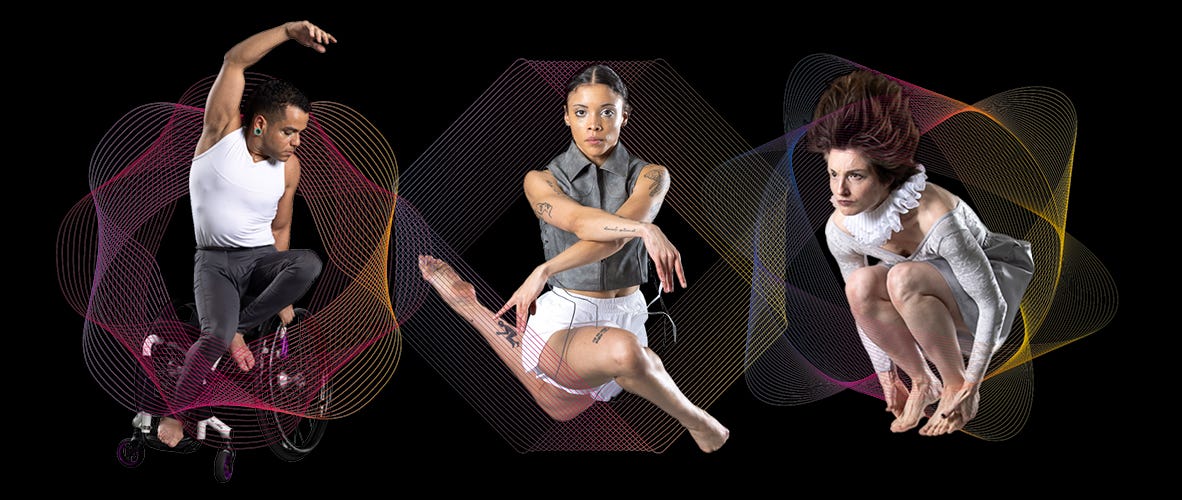
Patterns by AXIS Dance Company
Friday, April 17 - Saturday, April 18, in-person at Lincoln Center (Alice Tully Hall)
Led by Artistic Director Nadia Adame and Executive Director Danae Rees, AXIS Dance Company is one of the nation’s most acclaimed ensembles of disabled, non-disabled, D/deaf, and neurodiverse performers. With work by choreographers Nadia Adame, Sonya Delwaide, Christopher Unpezverde Nunez, Kayla Hamilton, and Natasha Adorlee, the performance will feature dancers JanpiStar, Julie Hasushi, Anna Gichan, Alaja Badalich, Hannah Westbrook, and Isaiah Newby.
AXIS is also offering workshops in NYC on Wednesday, April 15:1 - 3:30pm ET Integrated Contemporary Workshop with Movement Research
4:30 - 6pm ET Accessible Contemporary Repertory at Gibney Dance
Nearly Sighted / Unearthing the Dark by Kayla Hamilton
Thursday, April 16, 6:30 - 7:30pm CT, in-person at Indianapolis Movement Arts Collective (Indianapolis, IN)
Presented by Indy Movement Arts. In the original work, Kayla explores the gaps in knowledge in what we perceive, how we interpret, and what we understand in a sight obsessed world. Kayla’s dancing, entangled and chasing the literal light, mirrors the exhaustion of having a sight impairment in a visually obsessed world, and offers the possibility of accepting the darkness, and the faith that the light will come when it comes.

Great insight on the moon mission.