


What does the US Immigration and Customs Enforcement (ICE) agency actually enforce? The submission of life to eugenic fascist rule.
Its detention centers are fatal. Its supposedly normal operating procedures are fatal. Its off-duty agents are fatal. And it has used just 2.7% of the $85 billion at its disposal this year.
We can make 5 calls. We can know what to do if we encounter ICE. We can support local organizers under siege. We must. We must protect life.
If you need help during or after the winter storm taking place in the US, contact the Disability & Disaster Hotline at 1-800-626-4959 or hotline@disasterstrategies.org. You might also want to check out The Partnership for Inclusive Disaster Strategies’ Winter Storm Checklist for Disabled People.
NEWS
New Books
Today’s issue highlights new titles in disability culture and scholarship. Check out the New Books section from late September 2025 if you missed it. And if there are other texts you want to shout it, drop a link in the comments.
If you want to add to your library without supporting Amazon or other large corporations, consider these alternatives:
Nightlight Books is a disability justice-centered bookseller with all of its new titles by or about disabled folks.
Workshops 4 Gaza Bookshop organizes classes and workshops to raise funds for The Sameer Project.
Massive Bookshop is an anti-profit, abolitionist, online bookstore that contributes proceeds to bail funds.
Bookshop.org gives a portion of profits to independent bookstores.
Libro.fm lets you support local bookstores while listening to audiobooks.
An increasing number of academic books are also being published with Open Access options. The Directory of Open Access Books is a community-driven discovery service. For more approachable conversations about scholarly work on disability, the New Books Network podcast has a Disability Studies channel, which publishes audio interviews with authors of new and upcoming books free to the public.

James McMaster’s Racial Care studies “the forms of care that Asian Americans have taken up to survive the suffering they experience under neoliberal capitalism and white supremacy in the United States.”

Exhibiting for Multiple Senses, edited by Eva Fotiadi, “looks into artistic and curatorial research practices that emphasize the multisensory character of the human body in the encounter with artworks.”

Sign Language Interpreting for Theatre: A Collaborative Approach, edited by Lynette Taylor, Stephanie Feyne, and Candace Broecker Penn, is “a comprehensive guide to the art of sign language interpreting for the theatre as a collaborative practice.”

Laura Mauldin’s In Sickness and in Health is “an account of America’s failure to provide meaningful support to its chronically ill and disabled citizens and our resulting reliance on the unpaid caregiving labor of spouses and intimate partners.”

Access Vernaculars by Cassandra Hartblay explores moments when accessible design fails by tracing “how disabled people in one Russian city narrate experiences of pervasive inaccess.”

Rhoda Bernard’s Accessible Arts Education offers practical strategies for “reducing barriers, encouraging creativity, and fostering inclusive learning environments, ensuring all students can explore their potential and thrive in arts education.”

Cripping the Archive: Disability, History, and Power, edited by Jenifer L. Barclay and Stefanie Hunt-Kennedy, is a collection of interdisciplinary essays that “consider how and why physical, sensory, intellectual, and psychological disabilities are underrepresented, erased, or distorted in the historical record.”

Olivia Banner’s Crip Screens offers “a wide-ranging and ongoing history of Black, feminist-of-color, and crip resistance to psychiatry’s incorporation of hegemonic media technologies into treatment and research.”

Learning with Learning Disability by Owen Barden argues that “we need to learn with rather than from or about learning disability.”

Stephen Unwin’s Beautiful Lives: How We Got Learning Disabilities So Wrong is “a personal and pragmatic account” of “a startling and rarely told history.”

Disability Publics by the late Mark R. Bookman, posthumously edited by Carolyn S. Stevens and published with open access, “investigates the history of Japan’s ‘disability publics’: coalitions of activists, government officials, and other interested parties who have advanced policy agendas for specific communities by responding to social, political, and economic circumstances.”

Scot Danforth’s An Independent Man: Ed Roberts and the Fight for Disability Rights is “the first biography of one of the founders of the disability rights movement,” chronicling the life of an activist “who reimagined the meaning of equality and inspired generations of reformers.” (Ed Roberts Day was celebrated last Friday, Jan. 23, and proclaimed by California Gov. Gavin Newsom.)

Rebecca Monteleone’s The Double Bind of Disability shows how medical technologies force “disabled people to be accountable for adapting to a world built by and for nondisabled people while dismissing their lived experiences in favor of medical expertise.”

Disabling Intelligences: Legacies of Eugenics and How We are Wrong about AI by Rua M. Williams looks at the “influences of eugenics on the AI industry and the impacts of AI opportunism on disabled people.” (If you missed it, check out the recent Crip News issue on “AI and the Care Crisis” with expert commentary from Williams.)

Kay Inckle’s Overspill is a novel with a disabled protagonist trying to find freedom in a world forever changed by climate change.
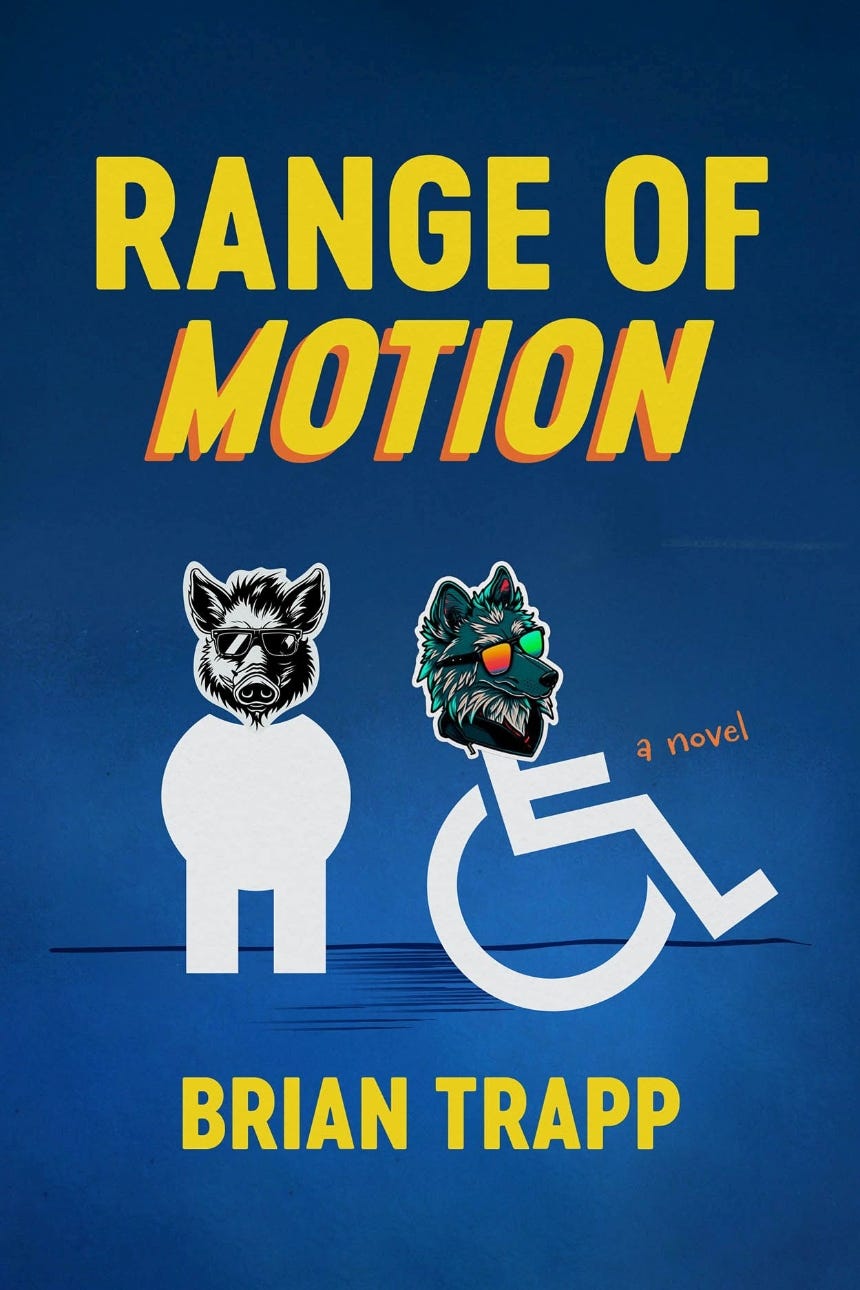
Brian Trapp’s novel Range of Motion follows two interabled twin boys “from infancy to the cusp of adulthood.”

Major thanks to Clayton Jarrard for helping compile this section.
CALLS
Applications are open for the National Disability Leadership Series, a 10-month virtual training program for US-based young disabled
adults, educators, professionals, and family members. Apply by Feb. 15.

The Autistic Self Advocacy Network is accepting applications for the 2026 Autism Campus Inclusion Leadership Academy. Apply by March 8.
Kinetic Light is hiring a Managing Director and a Director of Artistic Producing. Apply by Feb. 8.
EVENTS
Celebrating the Life of Bob Kafka
Saturday, Jan. 31, in-person at ADAPT of TX HQ, on Zoom, and livestreamed
On January 31 we celebrate Bob Kafka for many reasons. We marvel at the chemistry that made Bob Kafka an incomparable warrior for people with disabilities and their rightful places in our communities. Thousands of people worldwide celebrate Bob as a friend, mentor, encourager, teacher, problem-solver, policy wonk, organizer, clever civil disobedience leader, big picture guy, and truth-to-power advocate.
Note: everyone is invited to share a story about Bob through a short video that will be played at the memorial.

Zine Launch: A room with enough room for us
Wednesday, Jan. 28, 19:00 - 22:00 GMT, in-person at The Hill Station Cafe (London)
As a direct response to the proposed UK welfare cuts, this zine explores disabled, sick, mad, and crip narratives of community, rage and joy. The submissions span across themes of access, gender, labor, the body, and time. It includes work from 18 disabled artists across the UK: diverse in age, race, gender, sexuality and artistic practice.Access Playground Vol. 1
Thursday, Jan. 29, 7 - 8:30pm ET online
If you’re an Accessibility or Disability Inclusion Leader, you know this work is important, but it can also be isolating, emotionally taxing, and heavy. Access Playground by Infinite Flow Dance, is not another webinar. It’s a space to move, play, breathe, and reconnect to what keeps us doing this work: joy, liberation, and community. Systems don’t shift through policies alone. They shift through connection, creativity, embodiment, shared humanity, and through joy and liberation.
Regarding the resources for ethical book buying, I really aprecciate seeing alternatives to big corporations, especially since I'm constantly browsing for new reads to chill with after Pilates.