

NEWS
Wicked, an Anti-Ableism (Part 2)
⚠️ Spoilers ahead!

When Wicked: Part One came out last year, I was surprised to find myself thinking that it was “a story about fascist contrivances of the public perception of evil that is only challenged by a powerful disability solidarity with animal liberation.” Wicked: For Good, released in the US on Nov. 21, completes the process of pulling the curtain back, as it were, on The Wizard of Oz. This time, I found disability to have a more complicated place in the myth-busting backstory about how those witches got so iconic.
In the musical, Act 2 features a deeply ableist scene where the disabled character Nessarose (played by disabled actress Marissa Bode in the film) is magically able to walk in a pair of silver slippers (later ruby). Those wondering how director Jon M. Chu would rework this scene had it spoiled in the trailer: she doesn’t walk, she flies. Sigh.
But now that we can experience the full scene, it does actually seem to be a good teaser about something bigger that unfolds. When Nessa flies, her path is quite limited and constrained, perhaps misaligned with the sheer joy on her face. Did she have any control as she floated over her wheelchair (whose pointed top corners reminded me of the DIY tradition of spikes on push handles)?

That, it turns out, was a subtle and sophisticated characterization of Nessa’s willingness to make great sacrifices for love and independence, both ultimately unrealized. As Mayor of Munchkinland, she prohibits Munchkins from leaving their land so she can keep her unrequited lover close. When she botches a nonconsensual love spell, he turns into the tin man and runs the way nondisabled actors have poorly portrayed double amputees on film.

All of this happens in the lead-up to Nessa’s death, when she is alone outside as the fascist-made tornado drops a house on her and the slippers. In my notes, I jotted down: we’re not in Kansas’s disability-inclusive disaster preparedness anymore! Really, that moment has a more common narrative prosthetic function. Her alone-ness and vulnerability form the ultimate price for a disabled politician who’s only ever desperately wanted to be normal.
Nessa’s role in the film offers a provocative representation of disability politics during a time of fascist deceit, perhaps a ‘glass ramp’ within institutions consolidating power. And it helps us think through other moments where we might spot something like cross-movement disability solidarity. Like when Elphaba breaks the chains of the oxen grimacing in pain as they pull the colonial apparatus constructing the colonial yellow brick road. Or later when she releases the Wizard’s prisoners just in time to wreak havoc on the glittering wedding of Glinda and her permanently cinched waist.
What Wicked: For Good puts on screen is delivered through some usual Hollywood ironies. With a $165 million budget, raking in $393.3 million at box offices around the world after 10 days in theaters, it’s hard not to think about how far this money would go as a buttress against the coming changes to the US Department of Education’s Office of Special Education Programs. Wouldn’t it have made beautiful sense if Ariana Granda channeled Elphaba’s organizer energy and used even a tiny fraction of the marketing budget to talk about Long Covid after she tested positive during the final phase of the press tour?
So familiar and so strange, the film’s world and ours.
New Works

For Day With(out) Art that takes place each year on Dec. 1 for World AIDS Day, Visual AIDS presents Meet Us Where We’re At. The program of six videos features work by Kenneth Idongesit Usoro (Nigeria), Hoàng Thái Anh (Vietnam), Gustavo Vinagre & Vinicius Couto (Brazil/Portugal), Camilo Tapia Flores (Chile/Brazil), Camila Flores-Fernández (Peru/Germany), and José Luis Cortés (Puerto Rico).

On his (Un)hidden Substack, writer and historian Alex Green recently interviewed organizer and artist Keith Jones about disabled elders. “People are looking for the disability community or disability organizations to act in a certain way,” Jones said, “but they are not acknowledging that 95% of these organizations were started because parents realized their whiteness was not going to protect their child.”
A new poll shows how elders resist disability identity. 19% identified as disabled, but 53% identified as having an impairment when asked about particular kinds of conditions. The findings give researchers at the University of Michigan Medical School a better sense of how many older adults are disconnected from access supports that could improve their care.
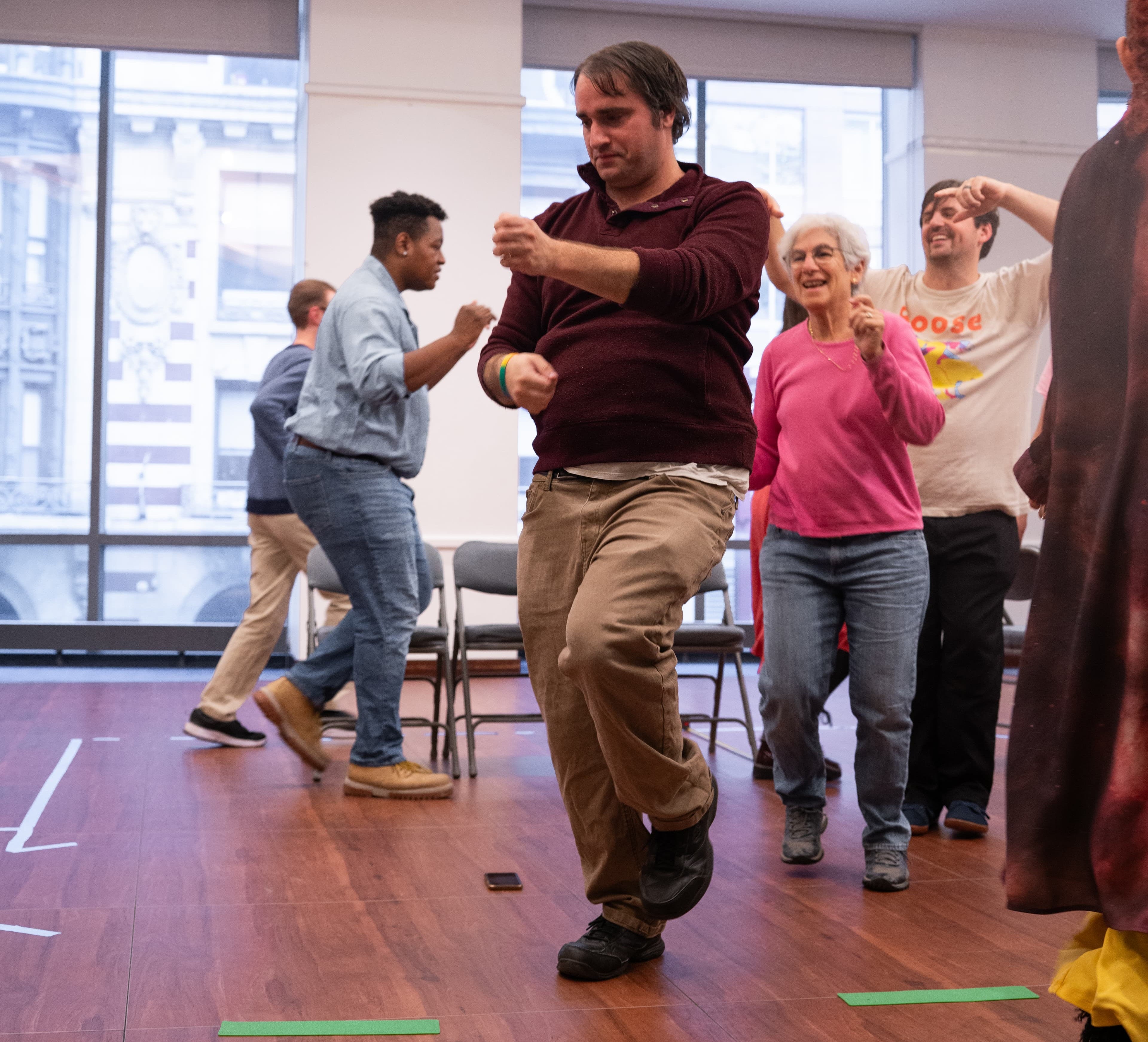
This week, neuroinclusive theater company EPIC Players premieres Autistic playwright Dave Osmundsen’s BUM BUM (or, this farce has Autism) at HERE Arts Center. In the November issue of the Brooklyn Rail, Autistic artist Harmon dot aut talks with Osmundsen and others involved in the production talked about “Neurodiverse narratives” on stage.

Finnegan Shannon’s exhibition Don’t mind if I do, featuring works by Lukaza Branfman-Verissimo, Pelenakeke Brown, Sky Cubacub, Emilie L. Gossiaux, Felicia Griffin, Ariella Granados, Joselia Rebekah Hughes, Jeff Kasper, Finnegan Shannon, Sandie Yi, and agustine zegers, is on view at Gallery 400 at the University of Illinois Chicago through Dec. 13. Accompanying the show are 4 solo exhibitions:
agustine zegers: A toxin threatens, but it also beckons
Sandie Yi: Digital Technology
Finnegan Shannon: i wish gays hung out at places where we can sit down
Ariella Granados: Like and Subscribe

The inaugural 2025 Indonesian Disability Arts & Culture Festival recently took place in Solo, Surakarta.
Unlimited recently published “Funding fundamentals: Let’s talk about money,” insights from a gathering of disabled artists with graphic capture by Jon Dorsett.
CALLS
Tomorrow is Giving Tuesday! GIVE TO DISABLED ORGANIZERS!
Like Calling Up Justice, which is hosting a 24-hour “Subathon” livestream that will be “a stage for community.”
You could also pre-order a reprint of Able Zine’s second issue to help with production costs.
If you want more ideas, try browsing past issues of Crip News.
If you’re based in the US, write to your federal legislators to demand oversight of the Trump administration’s dismantling of the Department of Education, which threatens to roll back decades of work to protect disabled students.
Ahead of a hearing of the Senate Special Committee on Aging, the Autistic Self Advocacy Network is collecting stories about independent living to help Senators understand the importance of Home and Community Based Services and Centers for Independent Living. Submit your story by Dec. 7.
The Disability Action Research Kollective is seeking volunteers to write 350-word pieces on disability and eugenics.
EVENTS
dreaming our futures + embodying our dreams
Saturday, Dec. 6, 3 - 5pm ET, on Zoom
Created and led by alexa dexa, presented by RestFest. A year-long crip ritual opera made by, with, and for disabled folks dreaming together from bed. rooted in disability justice, dreaming our futures centers processes of community co-creation, responsive accessibility, and radical inclusion in a live participatory remote setting that prioritizes our collective safety through ongoing pandemic.Meet the Artists: Cripping Art Virtual Holiday Market
Saturday, Dec. 6, 3pm ET, online
Priya Ray (@diyabled) put out a call, and 37 incredible Disabled artists stepped forward. Together we created graphics, schedules, support networks, and a community rooted in care. This work is inspired by Alice Wong, who reminded us that Disabled people deserve power, voice, and spaces that honor us. Join our live virtual event to meet the artists and experience music, poetry, and performances by Disabled creatorsPop-up! Emergency Preparedness
Thursday, Dec. 4, 1 - 3pm PT, in-person at the San Francisco Disability Cultural Center and online
The EPrep team from the SF Community Living Campaign will be providing information on preparing for Emergencies: power outages, earthquakes, climate change, and medical events. Please come visit Mark and Paul to find out how to prepare for these events. Let’s stay safe!A Celebration of Indigenous Art and Storytelling: Crushing Colonialism’s The Magazine 2nd Anniversary
Thursday, Dec. 4, 6 - 9pm ET, in-person at Baltimore Center Stage
Crushing Colonialism is proud to announce a celebration marking the second anniversary of Crushing Colonialism: The Magazine, taking place on December 4, 2025, at Baltimore Center Stage. Open to all, Indigenous relatives and allies, this FREE event is part of the theater’s Shared Space Initiative and aims to bring together Indigenous communities from the Baltimore region and beyond for a joyful, accessible, and inclusive celebration. Complimentary copies of The Magazine will be distributed alongside traditional and allergy-conscious foods. The celebration will take place in a fully accessible space, designed to welcome Deaf, disabled, chronically ill, and multiply marginalized Indigenous participants. Accessibility and inclusion remain core values of Crushing Colonialism’s work.Design and Disability | Inspired by Alice Wong
Sunday, Dec. 7, 11am - 3pm ET, in-person at Cooper Hewitt, Smithsonian Design Museum (NYC)
This gathering invites participants to collaboratively reflect on Wong’s transformative impact on inclusive design and the participation of those with lived experience in accessible design strategies. Learn about Wong’s influence on design thinking through community discussion and shared reflection. Engage in drop-in crafting and art-making activities inspired by her advocacy and creativity. Whether you are familiar with her work or just learning about her contributions, this event offers space for connection, creativity, and care.
Interesting analysis. “So familiar and so strange, the film’s world and ours.” Just follow the money. As for elders and disability identity, just observe our gait.